

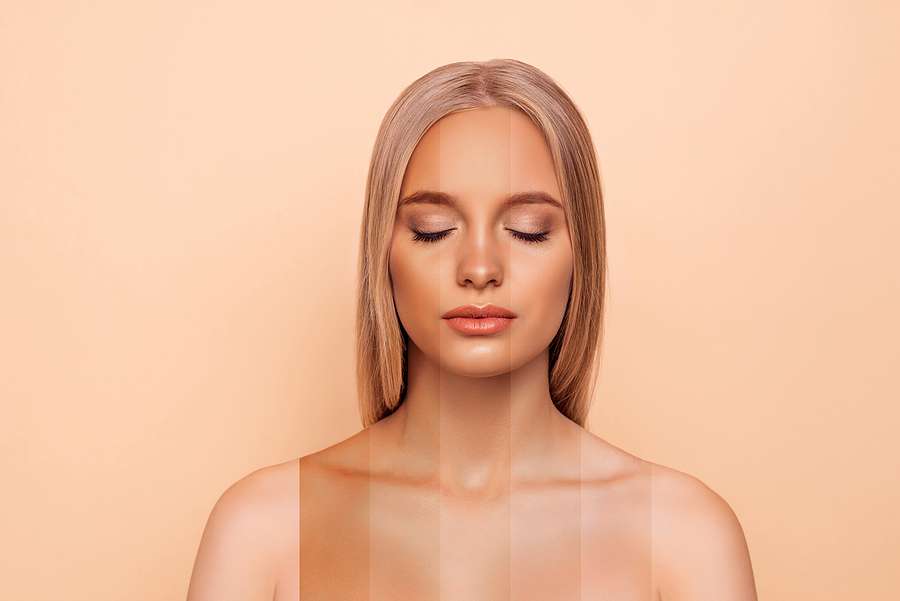
 We’ve all heard about “beauty sleep,” but does the science support the popular idea that sleep affects how our skin looks and ages? With social media filled with skincare routines and beauty supplements, it’s worth asking what role sleep actually plays.
The short answer is that poor sleep does associate with visible changes to skin appearance, and there are plausible biological reasons why. But—and this is important—the evidence isn’t as strong as you might think from reading beauty magazines.
What happens after a bad night’s sleep?
Most of us have experienced looking in the mirror after a restless night and seeing the effects staring back. Research confirms this isn’t just our imagination. Studies examining people after sleep deprivation have documented darker under-eye circles, puffier eyelids, paler skin tone, and more visible fine lines.
In one study, researchers restricted volunteers to just four hours of sleep and measured changes to their skin. Skin hydration decreased within a day, and by day four, skin texture and elasticity were noticeably worse. These changes appeared quickly and were measurable.
The encouraging part? When people returned to adequate sleep, improvements appeared relatively rapidly too, with some changes visible within days and deeper improvements developing over a few weeks of consistent good sleep.
The bigger picture: chronic poor sleep and skin aging
Beyond acute effects, several studies have compared people who consistently sleep poorly (five hours or less per night) with good sleepers getting seven to nine hours. Poor sleepers showed higher skin aging scores, worse barrier function—meaning their skin lost more moisture and recovered more slowly from damage—and reduced elasticity.
But here’s where we need to be careful about drawing conclusions.
What we don’t know
These studies comparing good and poor sleepers are observational—they look at groups of people and note differences. They can’t prove that poor sleep causes the skin changes. Why not? Because people who sleep poorly often differ in many other ways.
The most important confounding factor is probably stress. People sleeping only five hours nightly are often chronically stressed, and stress affects skin through many of the same mechanisms we attribute to sleep loss. Elevated cortisol—the stress hormone—breaks down collagen, drives inflammation, and impairs skin barrier function. It’s difficult to determine how much of the observed skin aging comes from lack of sleep itself versus the stress that’s preventing sleep.
We also lack the gold-standard evidence: randomized controlled trials where people are assigned to sleep improvement interventions and skin outcomes are measured. Until we have those studies, we can’t definitively prove causation.
The biological mechanisms are plausible
That said, there are good reasons to think sleep matters for skin health beyond just being a marker of stress.
During deep sleep, growth hormone is released in pulses. This hormone stimulates collagen production and cellular regeneration throughout the body, including skin. Without adequate deep sleep, these growth hormone pulses become diminished.
DNA repair processes also follow circadian rhythms, with repair activity peaking during certain times of day and night. Research on night shift workers suggests that disrupted sleep patterns may impair DNA repair capacity, allowing damage to accumulate over time.
Cell proliferation—the generation of new skin cells—follows precise timing patterns, with cell division peaking around midnight in several studies. Skin barrier genes that strengthen the protective outer layer show enhanced expression during late night and early morning hours.
So the mechanisms are there. What we don’t know is how much optimizing sleep actually enhances these processes in practice, and whether the benefits are clinically meaningful.
What about hormonal changes?
For women, hormonal fluctuations across the menstrual cycle, during pregnancy, and especially around menopause significantly affect sleep. Between 40-60% of women going through menopause report sleep disturbances, with hot flashes and night sweats disrupting sleep for many.
Since skin aging accelerates around menopause, it’s tempting to link poor sleep directly to skin changes during this time. But again, multiple factors change simultaneously—hormones, stress levels, health conditions—making it difficult to isolate sleep’s specific contribution.
The practical takeaway
 While we can’t prove with certainty that improving sleep will improve your skin, several points are clear:
The recommendation to prioritize sleep stands on broader grounds. Getting seven to nine hours of sleep consistently benefits cardiovascular health, metabolism, cognitive function, and mental health. These benefits are well-established from randomised trials, even if skin-specific benefits remain unproven.
If skin changes are a motivating factor for improving sleep, that’s a perfectly reasonable motivation, even if the skin benefits specifically haven’t been proven in rigorous trials. The broader health benefits make good sleep worthwhile regardless.
Sleep consistency may matter as much as duration. Going to bed and waking at similar times each day, including weekends, associates with better health outcomes across multiple domains. This often gets less attention than total sleep duration but may be equally important.
Address the basics first. Before turning to supplements or expensive skincare routines timed to circadian rhythms, focus on the fundamentals: consistent sleep schedule, limiting screens before bed, managing stress, creating a cool, dark, quiet bedroom environment, and finishing exercise several hours before bedtime.
When to seek help
If you’re consistently sleeping poorly despite good sleep habits, it’s worth discussing with a health professional. Conditions like sleep apnea, insomnia, and restless legs syndrome are common and treatable. Poor sleep may be a symptom of an underlying issue that deserves attention in its own right, regardless of any skin concerns.
The bottom line
The relationship between sleep and skin health is complex. Poor sleep clearly associates with worse skin appearance and function, and the biological mechanisms are plausible. But we can’t yet prove that improving sleep causes better skin, as opposed to both being markers of overall health and stress levels.
That uncertainty doesn’t mean sleep doesn’t matter—it just means we should be honest about what the evidence shows and doesn’t show. For now, good sleep remains one of the pillars of overall health, and if your skin looks better as a result, that’s a welcome bonus on top of all the other proven benefits.
Resources / Links:
- Healthy sleep – American Academy of Sleep Medicine
- Beauty sleep – Sleep Foundation (US)
- Beauty sleep: is it real? – Healthline
Need more information on how you can sleep better?
At SleepHub we understand the struggle people endure with sleeping problems which is why we have created a comprehensive FAQs page with information for those seeking information about sleep disorders and potential solutions. You can also check out our extensive resources and subscribe to our podcast.
